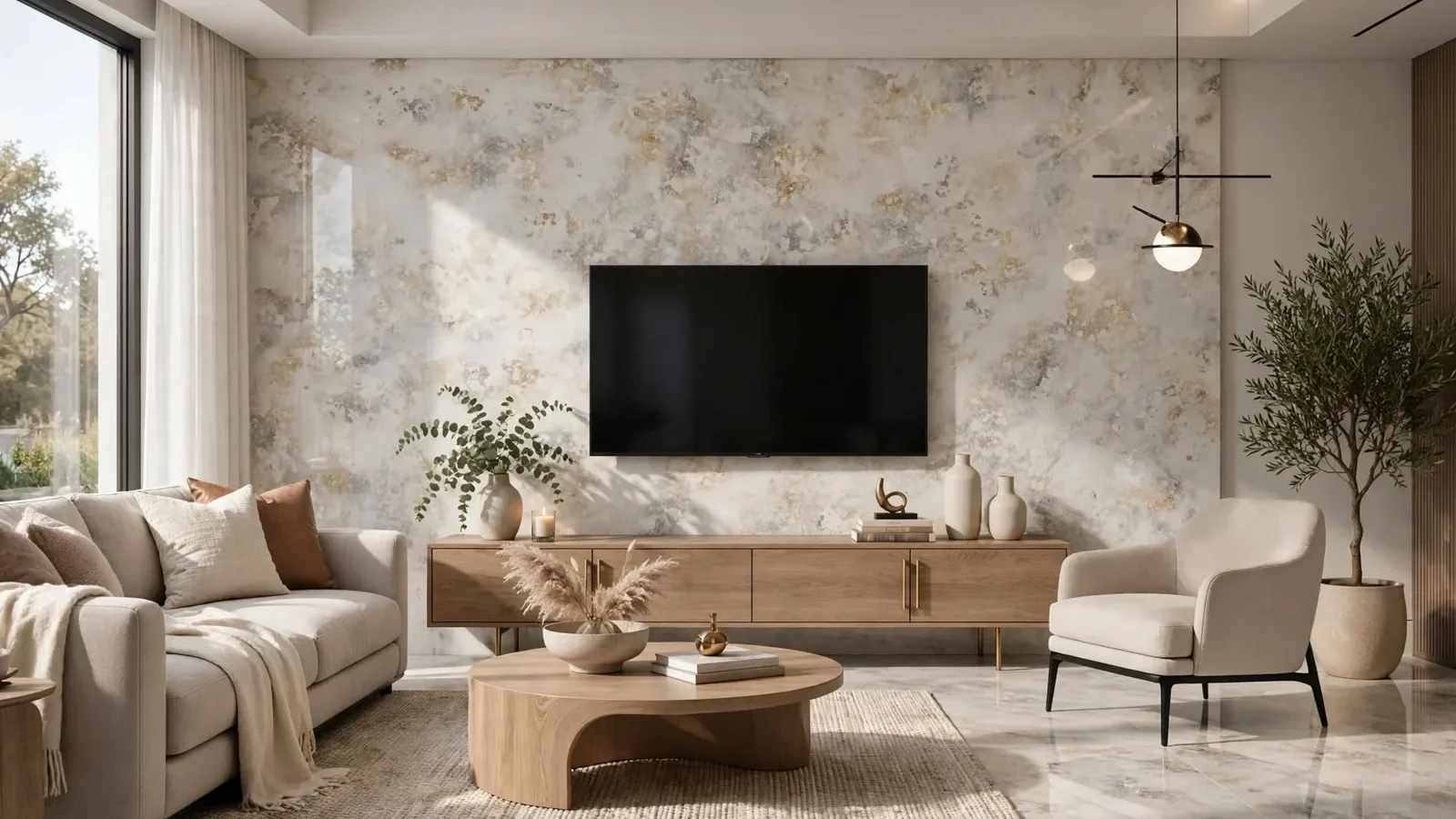
Compare Calacatta quartz vs Statuario marble durability from an engineering perspective. Explore strength, hardness, porosity, maintenance, and long-term performance
Comparing calacatta quartz vs statuario marble durability? Learn the ASTM standards, hardness metrics, and maintenance requirements for your next project.
Key Takeaways
- Engineered quartz (Calacatta) offers a Mohs hardness of 7, making it vastly more scratch-resistant than Statuario marble (Mohs 3-4).
- Statuario marble requires regular sealing due to its high porosity and susceptibility to acidic etching, whereas quartz is non-porous and NSF-51 certified.
- Architects should specify Calacatta quartz for high-traffic commercial use and reserve Statuario marble for luxury applications where maintenance is manageable.
- Structural integrity in transit is as important as material durability; professional A-frame crating is mandatory for international shipments.
- Belnexa provides standardized jumbo slab sizes (3200x1600mm) optimized for minimal joint lines and efficient fabrication.
When comparing calacatta quartz vs statuario marble durability, pros look past the look of the stone. I have spent ten years sourcing stone around the world. I have learned that the right choice depends on how you plan to use the space.
Key Takeaways
- Engineered quartz (Calacatta) hits a 7 on the Mohs scale. It resists chips and scratches better than Statuario marble (3-4).
- Statuario marble contains calcium carbonate. It reacts easily to household acids like lemon juice or vinegar.
- Engineered quartz is non-porous and NSF-51 certified. Marble needs regular sealing to stop stains and bacteria.
- Use engineered quartz for busy commercial areas. Save natural Statuario marble for luxury spots where you want a classic, aging look.
Material Science: Why Composition Dictates Performance
Statuario marble is a natural rock made of calcium carbonate. In a lab, this means it reacts to chemicals. According to the ASTM C97 standard, marble absorbs water at levels between 0.15% and 0.5%. This means you must clean and seal it often.
Calacatta engineered quartz is different. It is made of 93% crushed quartz mixed with strong resins. This mix creates an ASTM C880 flexural strength of over 40 MPa. This makes it much stronger and easier to move during installation than natural marble.
Technical Performance Comparison
| Feature | Calacatta Engineered Quartz | Statuario Natural Marble |
|---|---|---|
| Mohs Hardness | 7 (Highly Resistant) | 3 – 4 (Prone to Scratching) |
| Water Absorption | <0.05% | 0.15% – 0.5% |
| Chemical Resistance | High | Low (Highly Reactive) |
| Maintenance Level | Low (No Sealing) | High (Periodic Sealing) |
Professional Recommendations for Fabricators
I often work with large, jumbo-sized slabs (3200x1600mm). The steady density of engineered quartz makes it easy to cut clean, sharp edges with a CNC machine. When using Statuario marble, always check the batch for consistency. Natural stone varies in color and veins because it comes from the earth. For those shipping stone, use reinforced A-frame crates. This prevents breakage during transport, no matter which stone you choose.
Frequently Asked Questions
Q: Does Calacatta quartz require sealing like Statuario marble?
A: No. Calacatta quartz is a non-porous, engineered product that does not require sealing, whereas Statuario marble is highly porous and requires recurring sealing to prevent staining.
Q: Which material is better for kitchen countertops?
A: Calacatta quartz is generally preferred for high-traffic kitchen countertops due to its durability, stain resistance, and ease of cleaning, while Statuario marble is typically reserved for low-traffic or high-luxury aesthetics where the owner accepts the need for maintenance.
Q: Can I use harsh cleaners on engineered quartz?
A: Engineered quartz should be cleaned with mild, pH-neutral soaps. Harsh, high-alkaline, or acidic cleaners can damage the polymer resins that bind the quartz, potentially affecting the finish over time.
Q: What is the standard container capacity for 20mm slabs?
A: A standard 20ft container typically holds between 105 and 110 slabs of 20mm thickness, provided proper wooden A-frame crating is used for safety.
VERIFIED TOPIC EXPERT & AUTHOR BIO
“The Belnexa Editorial Team comprises master stone engineers and material scientists with over 20 years of experience in the international stone supply chain, providing data-driven insights into architectural material performance.”
Editorial Integrity & Affiliation Disclosure:
We operate under strict independent editorial guidelines. No brand or vendor exerts any influence over our testing parameters or reviews. All products discussed are independently acquired or evaluated by our experts.
As an Amazon Associate, we earn from qualifying purchases.