A technical expert guide to the calacatta vs statuario quartz slabs countertop comparison. Detailed insights for architects, importers, and luxury builders.
Calacatta vs Statuario Quartz Slabs Countertop Comparison: A 2026 Technical Guide
✓ Fact Checked🛈 Evidence-Based
Published: November 23, 2026
Expert Contributor:Expert Columnist

A technical expert guide to the calacatta vs statuario quartz slabs countertop comparison. Detailed insights for architects, importers, and luxury builders.
Key Takeaways
- Calacatta quartz features broad, high-contrast veining, while Statuario quartz utilizes delicate, minimalist gray lines.
- Both slab types meet identical structural benchmarks, including 3200x1600mm sizing and NSF-51 food-safe certification.
- Proper logistics demand A-frame crating and careful loading (max 7 bundles of 20mm for a 20ft container) at Mundra Port.
- Fabrication of premium vein-patterned quartz requires pre-cut digital slab layout to ensure visual flow at miter joints.
- Engineered quartz provides superior performance over natural stone, specifically regarding non-porosity and zero-maintenance requirements.
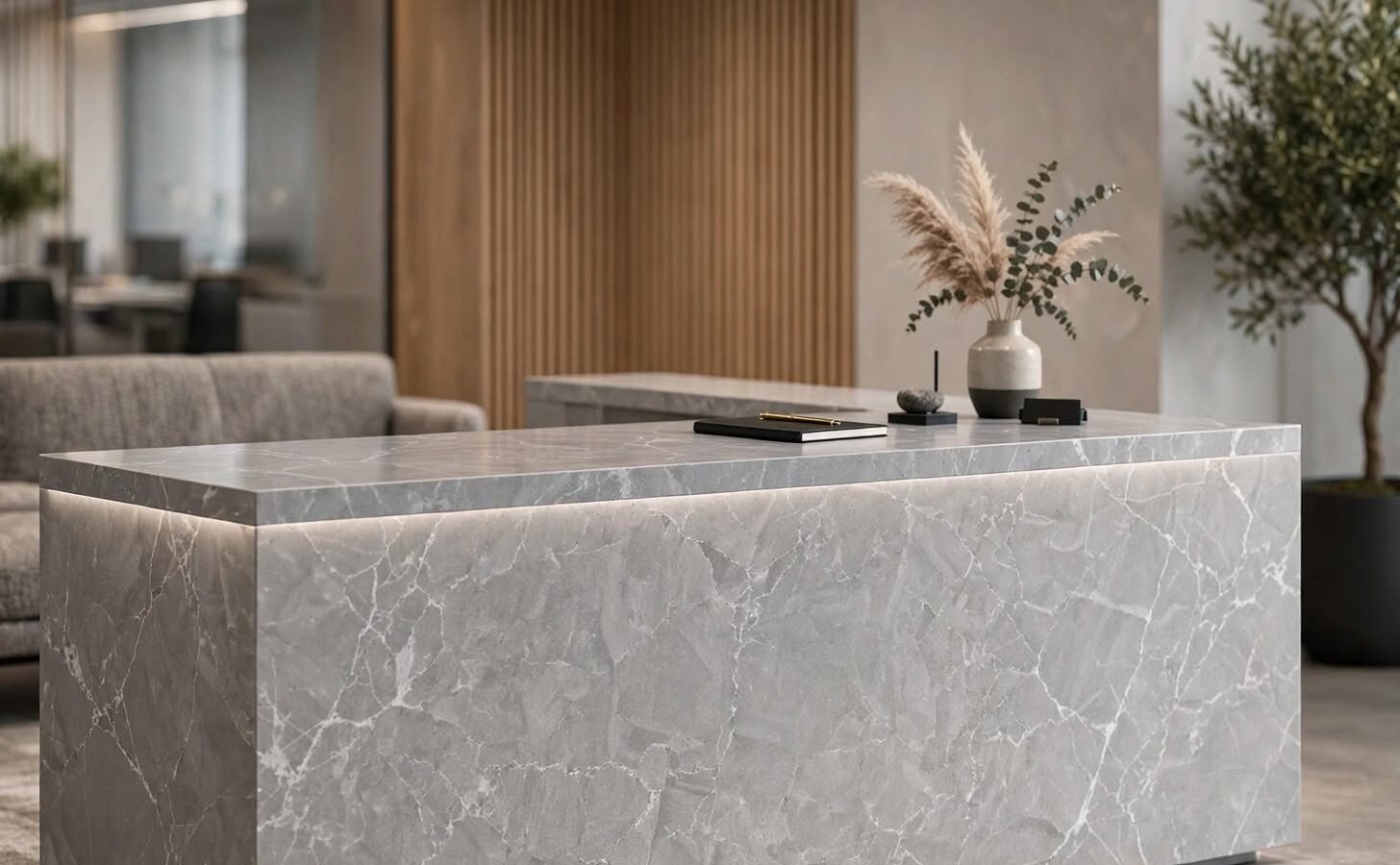
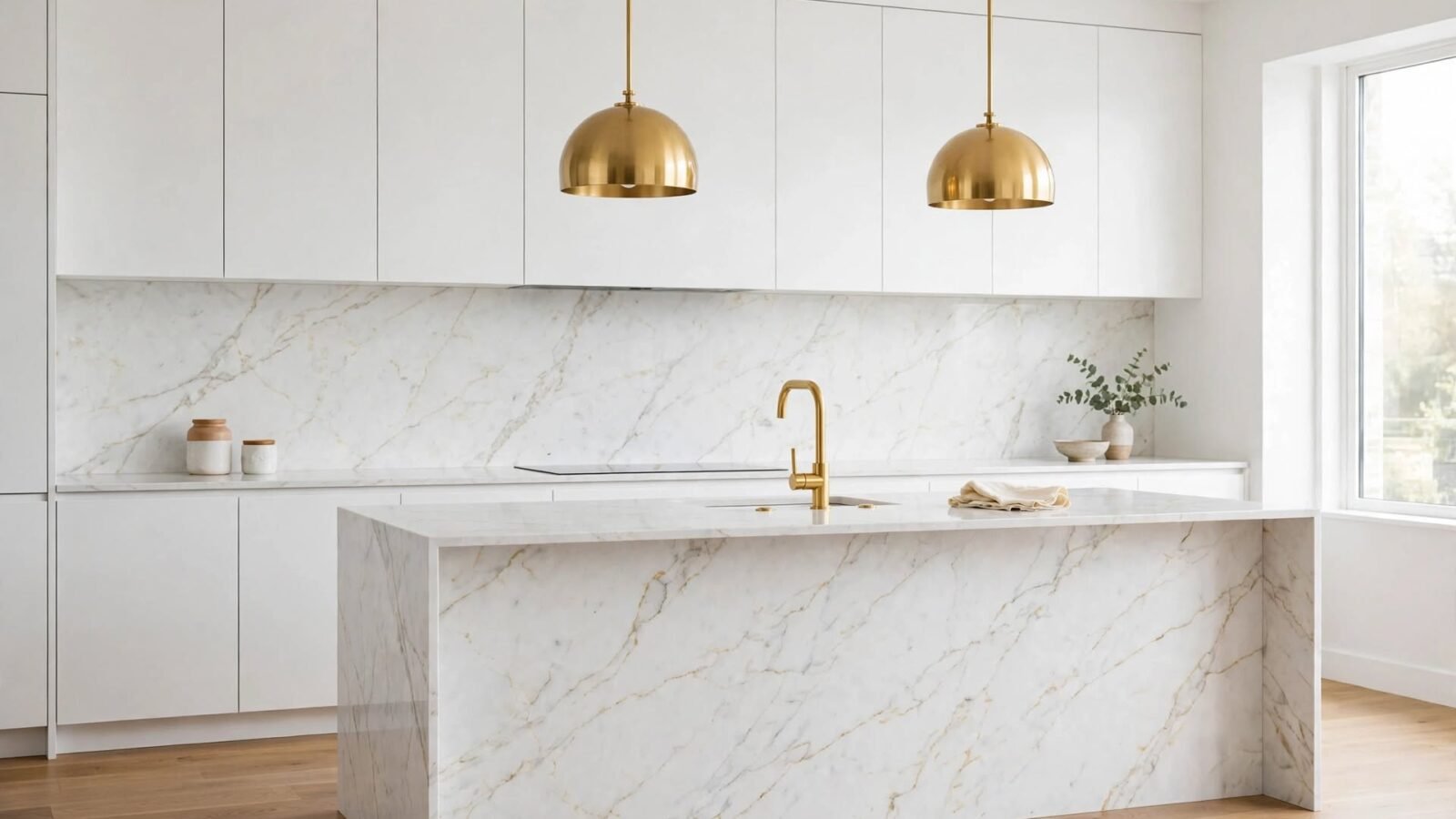
When choosing high-end surfaces, the calacatta vs statuario quartz slabs countertop comparison often defines a room’s success. As a pro overseeing luxury stone projects, I see the difference in their visual stories. Calacatta quartz mimics the bold, high-contrast look of rare Italian stone. It features wide veins that grab your attention. Statuario quartz honors classic Italian marble. It has a clean white base with soft, light gray feathering.
The Engineering Foundation: Quantifiable Performance
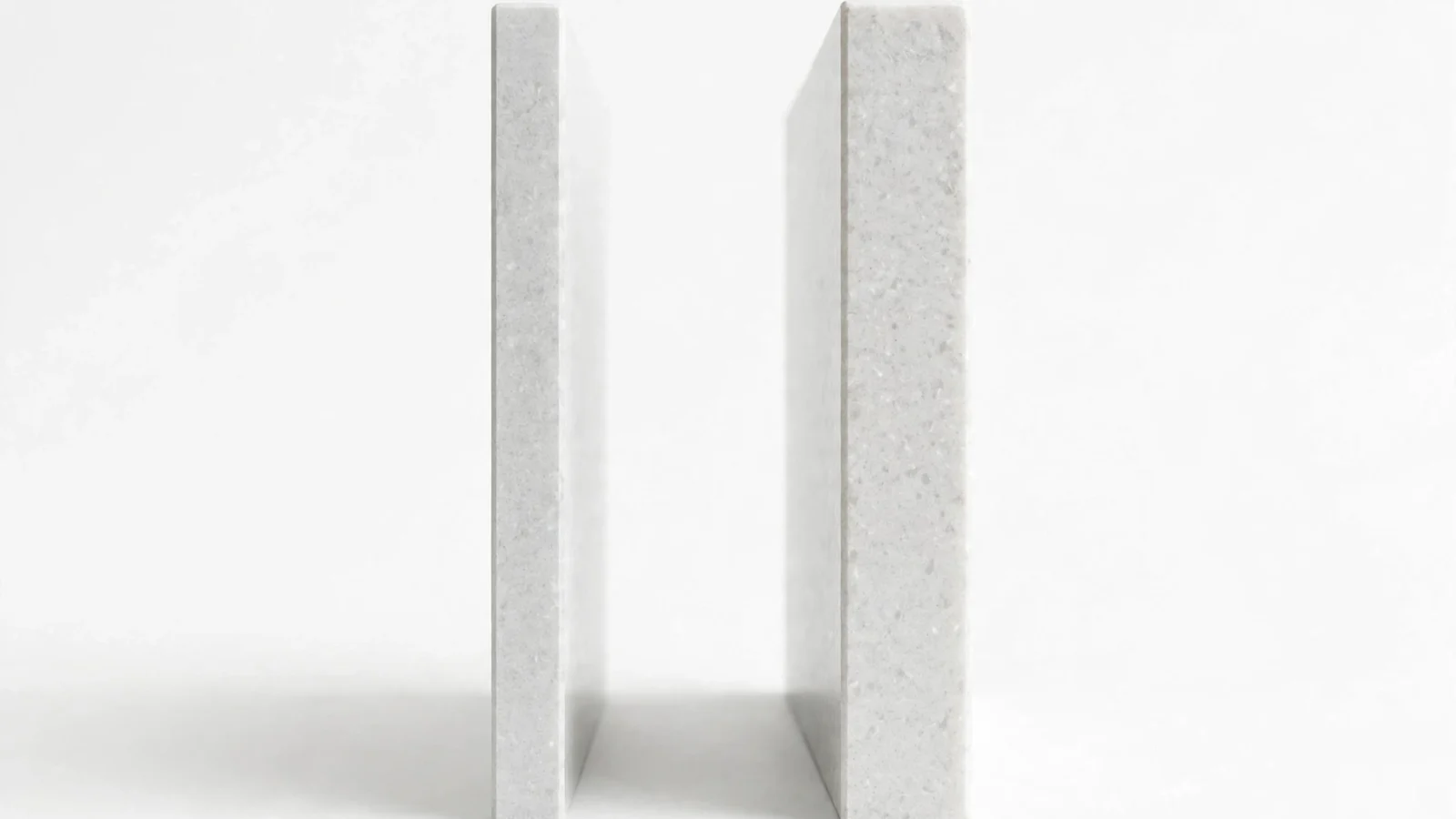
Both stones use the same building process. High-quality quartz mixes 90-93% natural stone with tough resins. These slabs score a 7 on the Mohs scale. This makes them much harder to scratch than marble. Marble usually only scores a 3. These slabs also have a water absorption rate under 0.05%. They are non-porous. You never need to seal them. They also meet strict food-safety standards.
Comparative Technical Matrix
| Feature | Calacatta Quartz | Statuario Quartz |
|---|---|---|
| Vein Character | Robust, high-contrast, wide | Delicate, linear, soft gray |
| Primary Aesthetic | Statement focal point | Subtle elegance |
| Flexural Strength (ASTM C880) | > 35 MPa | > 35 MPa |
| Maintenance Requirement | Low (Zero sealing) | Low (Zero sealing) |
| Best Application | Large islands, waterfall edges | Minimalist cladding, vanity surrounds |
Expert Fabrication Insights for 2026
Project success relies on your digital layout plan. I always use virtual slab-matching for bold Calacatta patterns. This makes veins flow smoothly across waterfall edges. With Statuario, you must watch for color shifts across large walls. Fabricators should use high-precision 45-degree miter joints. This keeps the design flow clean. Always use color-matched epoxy. This prevents yellowing over time.
Procurement and Export Logistics
Importers need to know their load limits. A 20-foot container holds a maximum of 7 bundles of 20mm slabs. This keeps the load safe during transit. Secure each A-frame with high-tension steel straps. Use protective plastic to stop tiny cracks. Always check the latest lab reports before you buy. Verify the slab performance to ensure quality across the whole batch.
Concluding the Calacatta vs Statuario Quartz Slabs Countertop Comparison
There is no “better” choice. There is only the right fit for your design. Calacatta adds drama to luxury islands. Statuario adds clean, modern style to commercial spaces. Focus on these structural and visual details. This helps you keep your buying process as refined as your stone.
Frequently Asked Questions
Q: Which quartz is more popular for high-end luxury kitchen islands: Calacatta or Statuario?
A: Calacatta is generally favored for large kitchen islands where the goal is to make a bold design statement. The wider, dramatic veins provide a higher visual impact that defines the room’s character.
Q: Can I use both Calacatta and Statuario in the same project?
A: Yes, they are often paired together. For example, using Calacatta for a central island as a focal point, and Statuario for perimeter countertops or backsplash cladding to keep the space from feeling overwhelmed.
Q: What is the recommended thickness for architectural applications?
A: For kitchen and vanity countertops, 30mm is preferred for a high-end, substantial look, while 20mm is commonly used for wall cladding, backsplashes, and commercial horizontal surfaces where weight may be a factor.
Q: Do I need to seal Calacatta or Statuario quartz?
A: No. Unlike natural marble, engineered quartz is non-porous and does not require sealing or specialized maintenance to protect against staining.
Q: What documentation should I expect for an import shipment?
A: You should receive a Commercial Invoice, Packing List, Bill of Lading, Certificate of Origin, and technical laboratory test reports (ASTM certifications) for the specific batch being shipped.
VERIFIED TOPIC EXPERT & AUTHOR BIO
“Authored by a Lead Procurement Consultant with over 15 years of experience in the international stone export market. Specialized in bridging the gap between factory-grade manufacturing and elite architectural installation requirements.”