Quick answer
Non-porous quartz suits vanities and wall panels in bathrooms because water does not soak in and no sealing is required; use silicone at joints and confirm special conditions such as steam rooms with the manufacturer.
Why quartz works in bathrooms
Quartz is non-porous, so water, soap and cosmetics do not soak into the surface. Large slabs let you create seamless vanity tops and wall panels with few joints, which means fewer places for dirt to collect.
Vanities
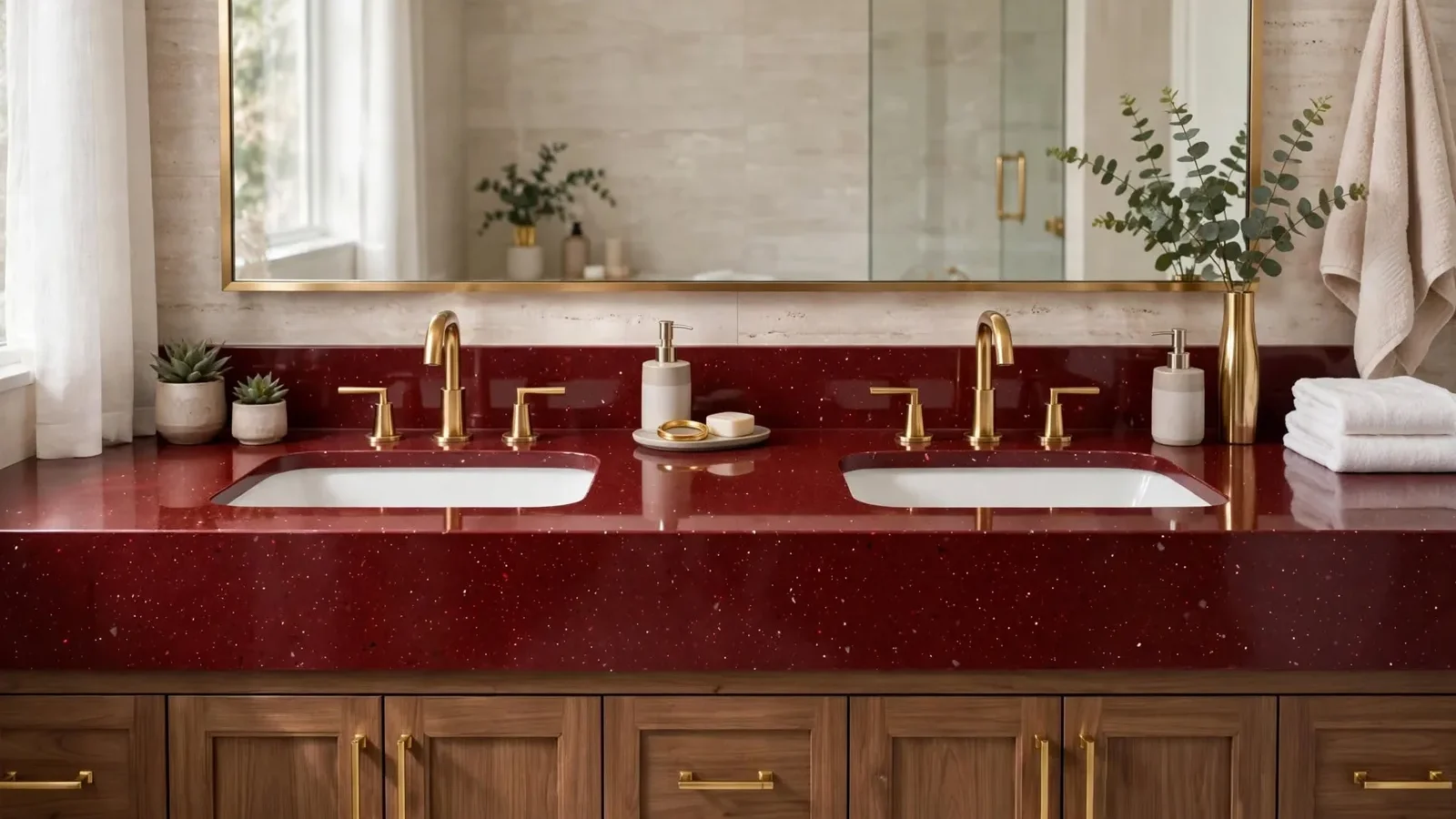
20 mm slabs suit most vanity tops. Integrated bowls and undermount basins require precise CNC work, so share basin templates with your fabricator early.
Shower walls and bath surrounds
Large wall panels can replace tile and grout. Joints should be sealed with a suitable silicone, and the substrate must be properly waterproofed.
Details to confirm
- Steam rooms, saunas and very high heat: ask the manufacturer for guidance.
- Outdoor or sunlit locations: engineered quartz is intended for interiors.
- Anti-slip needs on floors: ask about suitable finishes.
Choosing colours
Soft Onyx tones and Carrara whites create spa-like bathrooms, while deep Sparkle colours make a dramatic powder-room statement.
Frequently asked questions
Can quartz be used in a shower?
Quartz can be used for wall panels and surrounds when installed correctly with a waterproofed substrate and sealed joints. Confirm details for your project with the manufacturer and fabricator.